Choosing the best Metal Pail Components in 2026 requires more than comparing unit prices. Buyers must examine steel grade, coating performance, closure fit, gasket material, handle strength, and supplier consistency. A pail may look durable on a warehouse pallet, yet fail after repeated stacking, temperature changes, or rough transport.
Smithers’ report, The Future of Global Metal Packaging to 2028, identifies continued demand for durable, recyclable, and high-performance metal packaging. Grand View Research also reports steady expansion in the global metal packaging market, supported by industrial, chemical, food, and coatings applications. These trends affect every component, from lever-lock rings to corrosion-resistant lids. Small design choices can influence filling speed, product protection, and recovery after use.
Packaging engineer Dr. Jane Muncke emphasizes, “Safety depends on the whole packaging system, not one material alone.” Her point is especially relevant to Metal Pail Components. A lid, gasket, and body must work together under real operating conditions. That sounds obvious. It is often missed.
Global buyers should therefore compare verified material specifications, test records, production capacity, and quality-control procedures. ISO 9001 certification can support confidence, but it does not replace component testing. Buyers should request samples, inspect seam uniformity, and test closures with their actual products. One weakness remains: published market reports rarely explain component-level failure rates. This makes supplier experience and transparent technical data unusually important when selecting the best Metal Pail Components for 2026.
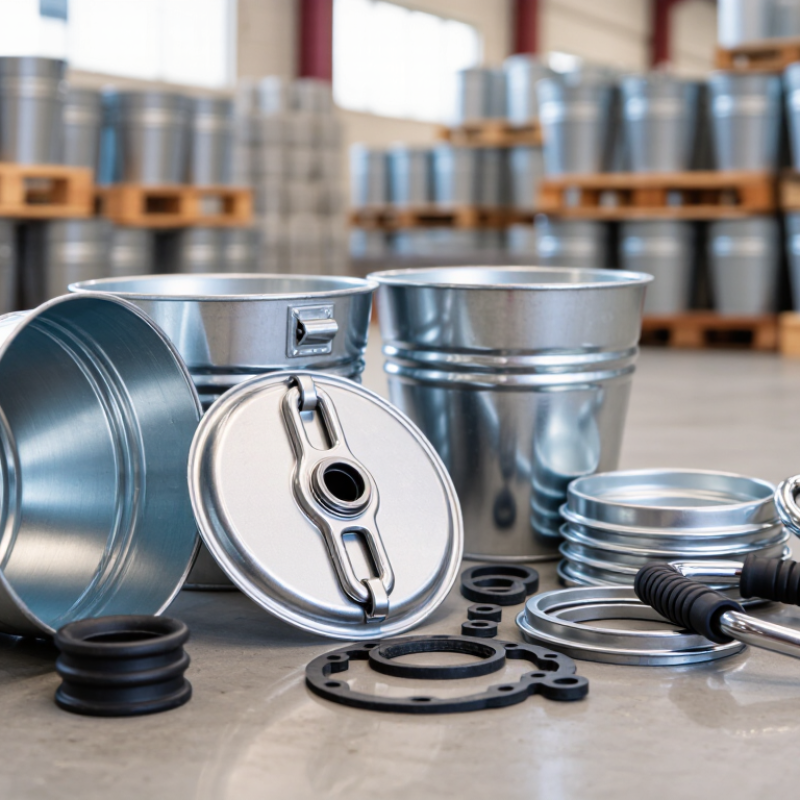
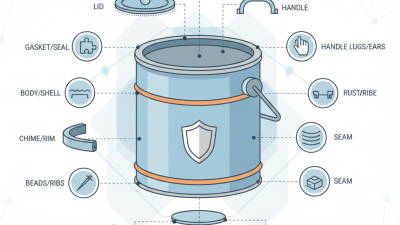
Metal pail components are the engineered parts that make a pail safe, usable, and transport-ready. The main components include the steel or tinplate body, lid, handle, wire ring, gasket, lever lock, bung, and internal coating. Each part has a defined role. The body provides strength and volume. The lid controls access. The gasket supports leak resistance. The handle improves manual movement. Small parts matter.
According to Grand View Research, the global metal packaging market was valued at over USD 140 billion in 2023. This demand reflects continued use in coatings, lubricants, food ingredients, and industrial materials. A pail’s core functions are containment, sealing, stacking, handling, and controlled dispensing. For global buyers, material thickness, closure design, coating compatibility, and dimensional tolerance require careful checking. A strong ring cannot correct a poorly fitted gasket. It is that simple.
Sustainability also affects component selection. The World Steel Association reports that more than 650 million tonnes of steel are recycled annually worldwide. Steel pails can support circular packaging systems when coatings and mixed materials are managed correctly. However, “recyclable” does not guarantee easy recovery. That assumption needs review. Procurement teams should request test records for drop resistance, seal performance, corrosion protection, and load stacking. A lighter pail may reduce material use, but it can also lose rigidity during transport. The best specification balances protection, cost, compliance, and real handling conditions.

Material selection begins with the pail body, lid, handle, and sealing ring. World Steel Association’s World Steel in Figures 2024 reported 1,888 million tonnes of crude steel production in 2023. This scale supports stable sourcing, but steel grade still matters. Buyers should request chemical composition, tensile strength, coating weight, and EN 10204 3.1 inspection certificates. Galvanized sheet can resist corrosion, while tin-plated steel often offers a cleaner internal surface. The choice depends on the filling material and storage climate.
Manufacturing accuracy protects performance. Blanking and deep drawing shape the body, followed by curling, seaming, and leak testing. Wire handles need controlled bending and secure attachment points. Lids require consistent bead dimensions, while elastomeric gaskets need stable compression after temperature changes. ASTM D4169 provides a useful framework for distribution testing, including vibration and impact exposure. ISO 9001-based process controls can support traceability, though certification alone cannot replace factory inspection.
I have seen attractive pails fail at the seam.
That detail matters.
Coating thickness, flange alignment, and closure torque should be checked by batch, not only during sample approval. The UN Recommendations on the Transport of Dangerous Goods also define performance testing for applicable packaging, including drop and leak evaluations. Global buyers should compare test methods, not just pass marks. A perfect surface is helpful, but inconsistent dimensions create bigger risks. Some suppliers still report averages without showing variation. That weakness deserves closer review.
For 2026 global buyers, pail components should be judged as one working system, not separate metal parts.
A lid needs a firm curl, consistent thickness, and a clean contact surface. Small dents can weaken stacking performance. For products requiring controlled storage, select liners and seals compatible with the contents. Ask for material records, dimensional drawings, and batch inspection data. These details support traceability and reduce costly surprises.
Handles must carry the filled pail without sharp movement.
A reinforced attachment point helps prevent tearing around the lug. Wire handles suit many applications, while rigid plastic or metal grips can improve comfort. Check the handle’s working load, corrosion resistance, and clearance from the lid. Closures should open with practical force, then close securely. A lever ring, clamp, or threaded design may fit different filling lines. Test samples after vibration and repeated opening. One showroom test is not enough.
Sealing systems deserve close attention.
Gaskets should remain elastic across expected temperatures and storage periods. A seal that looks tight may still leak during pressure changes or rough transport. Confirm compression, lid fit, and closing force with measured tools. For regulated markets, request applicable food-contact or chemical-resistance documentation when relevant. Field experience shows that suppliers sometimes optimize the lid but overlook the handle joint. That mistake is easy to miss. Buyers should compare full assemblies, not isolated unit prices. I would also question overly perfect test claims; real packing lines are rarely perfect.
2026 Best Metal Pail Components for Global Buyers?
Global buyers should evaluate every metal pail component as part of one safety system. The body needs consistent steel thickness, clean seams, and accurate dimensions. A lid should close evenly without excessive force. Locking rings must resist loosening during transport and storage. Handles need secure attachment points and smooth edges. Small defects matter.
Practical inspections should include coating adhesion, gasket compression, leak resistance, and drop performance. Inspectors can measure rim diameter at several points, not just once. For food, chemical, or industrial applications, confirm suitable contact materials and destination-market requirements. Safety documentation should identify raw materials, coatings, testing methods, and production controls. Declarations alone may be incomplete. Ask for current test reports.
Environmental compliance now reaches beyond recycled steel claims. Buyers should review recycled content evidence, coating emissions, packaging weight, recyclability, and waste obligations in the target market. Water-based coatings may reduce emissions, but performance still requires testing. Some suppliers provide weak lifecycle data. That deserves scrutiny. A pail may be recyclable, yet mixed components can complicate recovery. Design choices should consider separation, reuse, and end-of-life handling. Requirements differ by country, so technical teams should verify regulations before approval.
Reliable metal pail components begin with accurate specifications. Define the lid diameter, steel thickness, coating type, handle strength, and gasket material. Check whether the components fit your existing pail body without forced assembly. A small mismatch can cause leakage or damaged rims. Request production samples, not only catalog photos. Inspect the closing ring by hand. It should lock firmly without excessive pressure. The gasket should remain flexible after storage and transport.
Tips: Ask for dimensional inspection records, material certificates, and batch traceability. Confirm the supplier’s testing method. Useful checks include closure cycles, corrosion exposure, stacking pressure, and handle load testing. Packaging also matters. Components should arrive dry, separated, and protected from sharp contact. Wooden cases may add cost, but loose metal parts can arrive scratched. That trade-off deserves honest review.
International buyers should compare total risk, not just unit price. Confirm tolerances in writing and approve a reference sample before mass production. Clarify export documents, carton markings, lead times, and replacement procedures. Destination requirements can differ, especially for coatings, packaging, and industrial use. A polished sample can still mislead if production control is weak. I have seen reasonable designs fail because suppliers changed gasket materials without notice. Keep approved drawings and signed specifications attached to every order. Then review the first shipment carefully, even when the supplier seems experienced.