How to Identify Empty Paint Can Components for Recycling and Disposal?
The growing awareness of environmental issues has led to a focus on proper disposal methods for various materials. Among these, empty paint can components pose unique challenges. Noted sustainability expert Dr. Emily Chang states, “Understanding the components of empty paint cans is crucial for responsible recycling.” This insight underscores the importance of identifying these elements.
Empty paint can components typically include metal, plastic, and residues. Each type requires specific handling for effective recycling. For instance, metal parts can often be recycled, while leftover paint may need special disposal methods. Unfortunately, many people overlook these details. This negligence can lead to waste and environmental harm.
While efforts are being made to educate the public, more work is necessary. Many consumers feel confused about how to handle empty paint can components. This confusion highlights a gap in awareness that needs addressing. Correct practices not only support sustainability but also encourage responsible consumer behavior. Each action taken can make a difference.

Understanding the Components of Paint Cans for Recycling
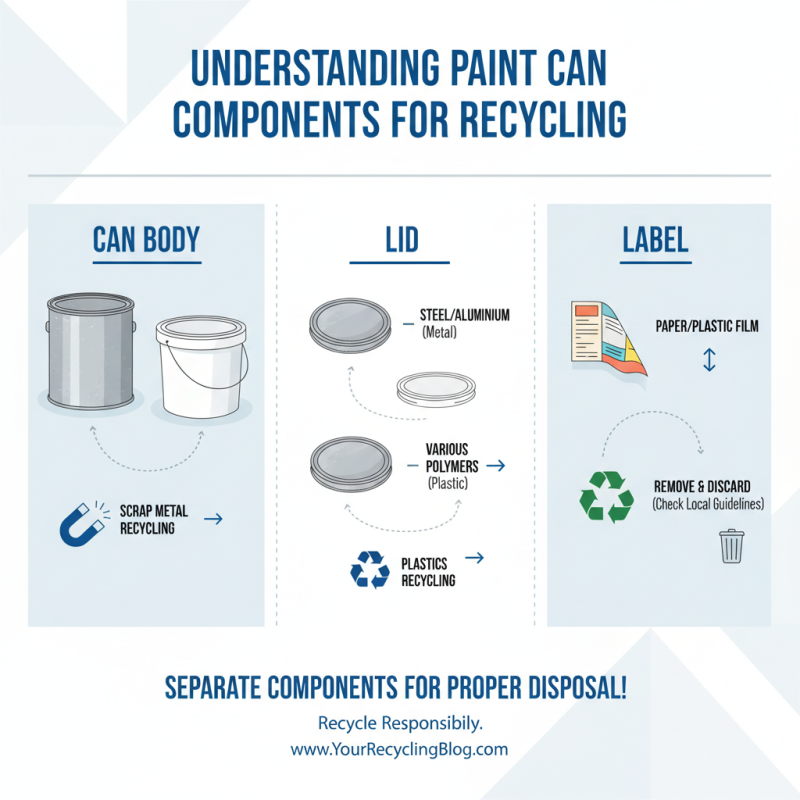
Understanding the components of paint cans is essential for effective recycling. Paint cans typically consist of metal or plastic bodies, lids, and labels. Metal cans are often made from steel or aluminum, while plastic cans may use various polymers. Each component must be addressed differently during disposal.
Start by emptying the paint can completely. Any leftover paint can contaminate recyclables. For metal cans, check if your local recycling program accepts them. Many programs do accept these, but guidelines vary. Rinse out the can to remove residual paint. This step is crucial. Plastic cans require similar treatment, although some areas do not recycle them.
Labels on paint cans can be tricky. They may have adhesive that complicates recycling. Always read local guidelines. Sometimes, labels need to be removed. This can be a nuisance and often overlooked. However, understanding these details can improve recycling outcomes. By being aware of each component, you contribute to a more sustainable practice, even if it feels tedious. However, many may still discard them without thinking twice. Engaging with your local waste management can clarify any uncertainties.
Identifying Empty Paint Can Labels and Their Materials
Identifying empty paint can labels and their materials is essential for proper recycling and disposal. Paint can labels often vary in composition. Many are made of paper, while others may contain plastic. Understanding these materials can aid in sorting them correctly.
When examining a paint can, check its label carefully. Is it easily removable? If so, it may be recyclable if made from paper. However, some labels are coated in plastic, complicating the recycling process. Be aware of the adhesives used, as they can affect recyclability. An imperfect procedure can lead to contamination in recycling streams.
It's important to research local recycling guidelines. Different regions have varying rules. Some areas might not accept paint cans at all. Others may have specific collection points. Reflect on how these differences impact your recycling efforts. The more you learn, the better you can contribute to sustainable practices.
Distinguishing Between Metal and Plastic Paint Can Types
When it comes to recycling paint cans, understanding the material type is essential. The two main components are metal and plastic. According to the Environmental Protection Agency (EPA), metal cans often account for about 80% of paint containers, while plastic makes up the remaining 20%. Knowing this distinction aids in proper disposal methods.
Metal paint cans typically have a higher recycling rate due to the demand for recycled steel. The Steel Recycling Institute reports that over 70% of steel cans are recycled into new products. On the other hand, plastic cans can be more challenging to recycle. Many facilities may not accept them due to their lower material value and the complexity of the recycling process. This leads to confusion and improper disposal.
It’s worth noting that not all facilities can handle mixed materials. Some recycling centers only accept specific types. Always check local guidelines before recycling. Ensuring paint cans are empty and clean is vital. Yet, it’s common for residual paint to be left behind, making the recycling process even more complicated. Addressing these gaps is essential.
How to Identify Empty Paint Can Components for Recycling and Disposal? - Distinguishing Between Metal and Plastic Paint Can Types
| Paint Can Type |
Material |
Recycling Instructions |
Disposal Method |
| Metal Paint Can |
Steel or Aluminum |
Empty, rinse, and place in metal recycling bin. |
If not recyclable, dispose of in trash. |
| Plastic Paint Can |
Polyethylene |
Check local guidelines; rinse and recycle if accepted. |
Dispose of in trash if not recyclable. |
| Composite Paint Can |
Cardboard with Plastic Liner |
Remove the liner, recycle cardboard; check plastic disposal. |
Dispose of unrecyclable components in trash. |
| Empty Paint Tub |
Plastic |
Rinse and recycle if locally accepted. |
Otherwise, disposal in trash is recommended. |
Recycling Protocols for Different Paint Can Components
When dealing with empty paint cans, it's essential to understand how to recycle and dispose of their various components responsibly. Paint cans typically consist of metal, plastic, and sometimes glass. Each material has its recycling protocols. Proper segregation is crucial.
Metal cans can often be recycled through local curbside programs. Ensure they are completely empty and dry. Rinse them to remove any residue. However, if leftovers remain, they may contaminate the recycling stream. Always check your local guidelines to confirm.
Plastic lids may require separate disposal. Many recycling centers accept only certain types of plastic. Identify the resin identification code on the bottom. This helps determine if your local facility can process them. Consider reusing them creatively if recycling isn’t an option.
Here’s a tip: Collecting materials together in a designated bin can simplify the process. Engaging family members creates teamwork and awareness about recycling. Remember, even small actions contribute to a more sustainable future.
Paint Can Components for Recycling and Disposal
Best Practices for Disposal of Paint Residues and Containers
Proper disposal of paint residues and containers is crucial for environmental safety. Many people overlook the importance of handling empty paint cans correctly. When dealing with leftover paint, let’s explore some best practices for disposal and recycling.
Tips: Always allow paint to dry completely. This prevents any spillage during transport. If paint is still wet, mix it with an absorbent material like cat litter to expedite the drying process. Once dry, check local regulations for disposal options.
Empty paint cans may be recyclable, but ensure they are clean and dry first. Rinse out any leftover residue to avoid contaminating the recycling stream. Remember that improper disposal can lead to environmental damage. Even small amounts of paint can pollute water sources.
Tips: Consider giving unused paint to local community groups or shelters. They often accept leftover supplies for various projects. If not, contact your local waste facility to learn about paint take-back programs in your area. It’s a proactive way to declutter and be responsible.