Leave Your Message

China Best Tinplant Can Components Manufacturer?

Choosing China’s best Tinplant Can Components manufacturer requires more than comparing factory prices. A reliable supplier should show consistent forming accuracy, clean surfaces, and stable delivery records. These details matter when a lid must fit smoothly or a body must resist dents during transport. In practice, buyers often discover that attractive quotations hide unclear specifications. That is where careful evaluation begins. It is not simple.

Experienced manufacturers usually explain their steel or tinplate grades, coating options, tooling limits, and inspection points before production. They can provide samples, dimensional reports, material certificates, and clear packaging plans. A responsible team also discusses minimum order quantities and realistic lead times. Factory visits, video audits, and third-party inspections can strengthen confidence. Yet no supplier is perfect. Small communication gaps may still affect color, edge quality, or assembly fit. Good partnerships leave room for correction, not just promises.

This guide examines how to identify a dependable China-based partner for Tinplant Can Components. It considers production experience, engineering support, quality systems, traceability, export service, and customer feedback. The strongest candidate should answer technical questions with evidence. It should also admit limitations when a design needs revision. Look closely. A manufacturer’s value appears in repeatable results, responsive problem solving, and honest documentation. The goal is not to select the loudest company, but the one that protects product consistency from prototype to shipment.

China Best Tinplant Can Components Manufacturer?

What Defines a Leading Tinplate Can Components Manufacturer in China

What Defines a Leading Tinplate Can Components Manufacturer in China

A leading tinplate can components manufacturer is defined by consistent engineering, not attractive promises. Experienced teams understand how small dimensional errors affect filling, sealing, and shelf stability. They control steel thickness, coating weight, curl diameter, flange size, and seam compatibility. Every batch should carry clear production records and inspection results.

Reliable manufacturers use calibrated equipment and practical testing. They check surface scratches, pinholes, coating adhesion, and edge quality under suitable lighting. Food-contact projects also require documented material compliance and traceability. Samples should be tested on the customer’s production line, not only inside the supplier’s workshop. This reveals problems early. Sometimes, a sample looks perfect but performs poorly during high-speed forming.

Tips: Ask for tolerance data, inspection reports, material certificates, and sample feedback. Visit the factory if possible. Observe how workers handle rejected components. Honest answers matter more than polished presentations.

Customization is another important measure of expertise. A capable supplier can adjust component dimensions, tooling, finishes, and packing methods without losing production control. However, no factory is flawless. Even experienced teams may overlook a minor burr or coating variation. The stronger supplier reports the issue, investigates its cause, and improves the process. That attitude builds reliability over time. A dependable manufacturer should also communicate realistic lead times, protect technical drawings, and maintain consistent quality after trial orders.

Key Tinplate Can Components and Their Manufacturing Processes

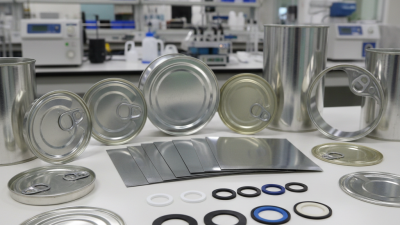
Selecting a capable tinplate can components manufacturer requires more than comparing prices. The key parts include the can body, top and bottom ends, pull tabs, seams, and sealing compound. Each component needs accurate dimensions and stable material performance. A body panel often begins as coated tinplate sheets, commonly around 0.18 to 0.30 millimeters thick. Thickness depends on the can size and application.

Manufacturing starts with slitting and blanking. Presses then form circular ends, countersinks, and reinforcing rings. The can body may be welded, flanged, and expanded through controlled tooling. After forming, protective coatings are applied and cured inside ovens. The coating must cover edges and corners evenly. Tiny gaps can cause corrosion later. Pull tabs are stamped separately, curled, and joined to the end with controlled riveting pressure. The sealant compound is applied around the end curl before final closing.

Reliable factories inspect dimensions, coating weight, seam strength, and appearance during production. Automated gauges help, but trained operators still matter. Visual inspection alone is not enough. Some workshops depend too heavily on it, which creates avoidable risk. A practical quality system should keep material certificates, mold records, batch samples, and test results. Clean storage also protects the tinplate from moisture stains and handling marks. No production line is flawless. Tool wear, uneven curing, or a slight tab offset can still appear. Regular maintenance and honest process review make the difference.

Materials, Quality Standards, and Safety Requirements

China Best Tinplate Can Components Manufacturer?

Choosing a tinplate can components manufacturer requires more than comparing prices. The material should match the product, filling method, and storage environment. Food-contact applications commonly use electrolytic tinplate with controlled steel thickness and protective coatings. Coating adhesion matters. A scratched surface can expose metal and accelerate corrosion.

Reliable production includes incoming material inspection, coating checks, dimensional control, and seam testing. Ask for migration reports, batch traceability, and documented quality procedures. Relevant food-contact requirements may differ by destination market, so current regulations must be verified before production. ISO-based systems can support consistency, but certificates alone do not prove daily discipline. Factory audits should include production floors, laboratories, storage areas, and corrective-action records.

Safety is visible in small details. Lid edges should be smooth, components should fit without excessive force, and finished parts should remain clean during packing. Leak testing and pressure testing help identify weak seams before shipment. In practice, no supplier is perfect. Records may be incomplete, and sample approval can hide process variation. Require pilot runs, retain samples, and inspect repeat batches. A dependable manufacturer explains limitations clearly and provides measurable evidence, not impressive promises.

Customization, Production Capacity, and Technical Support

China Best Tinplate Can Components Manufacturer?

Customization should begin with the component, not the catalogue. A capable tinplate can manufacturer adjusts ends, lids, rings, shells, and closures to your filling line. Engineers should review diameter, metal thickness, coating, embossing depth, and sealing conditions before tooling starts. Small dimensional errors can create visible gaps or difficult opening force.

The global metal packaging market was valued at about USD 142.8 billion in 2022, according to Grand View Research. Its forecast growth shows continuing demand for reliable, adaptable packaging components. However, production capacity needs careful checking. A factory may state a monthly output, but that number can exclude tooling changes, inspection time, or rejected parts. Ask for practical capacity by component type, material specification, and delivery schedule. Numbers need context.

Technical support is equally important. Experienced teams can provide drawings, sample approval, line-trial assistance, and root-cause analysis when a lid curls or a seam leaks. Production records, gauge calibration, coating inspection, and batch traceability strengthen reliability. ISO 9001-based processes are useful, but certificates alone cannot replace process evidence. Request inspection reports and sample data. Details matter. A better supplier also explains limitations clearly, including minimum order quantities and design changes that may increase scrap. That honesty is sometimes less impressive, but more useful.

China Best Tinplate Can Components Manufacturer?

Customization, production capacity, and technical support can be assessed by the range of standard can formats a manufacturer can develop and produce.

The chart shows commonly used nominal tinplate can diameter formats in millimeters: 52, 65, 73, 83, and 99 mm. Supporting multiple formats indicates flexible tooling and customization capability, while actual production capacity and technical support should be verified through line specifications, tooling resources, quality control, and engineering services.

How to Evaluate and Select the Best Chinese Manufacturer

Choosing the best Chinese tinplate can components manufacturer requires more than a competitive quotation. Begin with the component itself: lid, base, ring, or drawn shell. Ask for material thickness, dimensional tolerances, coating type, and production capacity. A serious supplier should explain how steel coils are inspected, how tooling is maintained, and how defects are recorded. Request recent sample batches, not only a polished display piece. Measure curl diameter, edge finish, and fit with your can body. Small differences can cause leakage, assembly delays, or damaged labels.

Tips: Visit the facility when practical, or arrange a live video audit. Check stamping presses, inspection stations, warehouse conditions, and lot identification. Ask to see calibration records and corrective-action reports. Confirm whether tooling belongs to you and how replacements are handled.

Evaluate reliability through evidence. Compare lead times against actual shipment records, not promises. Request a written quality plan covering incoming material, in-process checks, final inspection, and packaging. If components may contact food, verify applicable food-contact documentation for the destination market. An independent pre-shipment inspection adds useful distance. Communication matters too: clear drawings, samples, and change approvals prevent quiet assumptions. A supplier may answer quickly yet lack process depth. That is easy to miss. I would leave room for a pilot order. Even careful evaluations can miss tool wear, seasonal capacity, or packing damage. Good selection remains a test, not a guess.

China Best Tinplant Can Components Manufacturer? - How to Evaluate and Select the Best Chinese Manufacturer

Evaluation Dimension Recommended Benchmark Why It Matters Verification Method Suggested Weight
Material Grade and Tin Coating Use packaging-grade electrolytic tinplate or tin-free steel with documented thickness, temper, coating mass, and surface finish. Common tin coating levels are approximately 2.8–11.2 g/m² per surface, depending on application. Material selection affects corrosion resistance, forming performance, solderability, appearance, and product shelf life. Review mill certificates, coating-mass test reports, thickness records, and applicable tin mill product standards such as ASTM A623/A623M or EN 10202. 15%
Dimensional Accuracy Finished components should consistently meet approved drawings for diameter, height, curl profile, flange width, countersink depth, and panel dimensions. A practical supplier target is at least 98% of inspected samples within agreed tolerances. Accurate dimensions are essential for seaming, stacking, automated filling, and compatibility with existing production lines. Check first-article samples, control plans, calibrated gauges, statistical process control charts, and dimensional inspection records. 15%
Seaming and Closure Performance Can ends and bodies should produce stable double seams with no visible wrinkles, cracks, sharp edges, or leakage. Seam specifications must be confirmed using the customer’s can size, material thickness, and filling process. Poor seam geometry can cause leakage, loss of vacuum, contamination, and rejected finished products. Perform seam teardown analysis, seam thickness measurement, overlap calculation, pressure testing, vacuum testing, and production-line trials. 15%
Coating and Internal Protection Internal lacquer or coating should be selected according to the product’s acidity, salt content, sulfur content, alcohol level, and sterilization temperature. Coating coverage should be continuous and free from pinholes. The correct coating reduces metal migration, corrosion, flavor interaction, and discoloration during storage. Request coating technical data, dry-film weight records, adhesion tests, enamel-rater or porosity tests, retort testing, and product compatibility reports. 12%
Food-Contact Compliance Provide compliance documentation for the destination market, including applicable food-contact rules, coating declarations, migration testing, and restricted-substance controls. Documentation supports legal market access and reduces the risk of customs delays, recalls, or customer claims. Verify recent third-party test reports against requirements such as EU Framework Regulation 1935/2004, relevant U.S. FDA regulations, or applicable Chinese GB food-contact standards. 12%
Manufacturing and Quality-Control Capability Maintain documented incoming inspection, in-process inspection, final inspection, nonconformance control, traceability, and corrective-action procedures. ISO 9001 certification is a useful baseline. A controlled process provides more reliable quality than a supplier relying only on final inspection. Conduct a remote or on-site audit covering equipment maintenance, laboratory facilities, inspection frequency, calibration, batch identification, and complaint handling. 12%
Production Capacity and Lead Time The supplier should demonstrate capacity for the forecasted monthly volume, maintain safety stock of critical materials when appropriate, and provide a realistic lead-time plan. Typical production lead times may range from 20–45 days after approval, depending on tooling and customization. Capacity planning reduces shortages and protects continuity during seasonal demand or material disruptions. Review production schedules, equipment capacity, historical on-time delivery, raw-material planning, and a written supply-continuity plan. 8%
Tooling and Customization The manufacturer should support custom sizes, profiles, pull tabs, embossing, coatings, and decorative requirements while clearly defining tooling ownership, maintenance, modification costs, and expected tool life. Clear tooling control prevents delays, ownership disputes, and inconsistent replacement parts. Request tooling drawings, sample approval procedures, maintenance schedules, spare-part plans, and a written tooling agreement. 6%
Packaging and Logistics Protection Components should be protected from moisture, dust, deformation, edge damage, and corrosion during handling and ocean transport. Packaging should include batch identification and quantity control. Adequate packaging preserves component quality after long-distance transportation and warehouse storage. Approve packaging specifications, inspect loading methods, review export carton or pallet strength, and conduct trial shipments when necessary. 3%
Total Cost and Commercial Transparency Compare total landed cost rather than unit price alone, including material, tooling, testing, packaging, freight, duties, payment terms, and potential quality-loss costs. The lowest quoted price may create higher costs through defects, delays, rework, or incompatible components. Use a standardized quotation sheet and compare at least three technically qualified suppliers using identical specifications and delivery terms. 2%
Total Suggested Evaluation Weight 100%