Leave Your Message

10 Tips for Buying Metal Packing Components

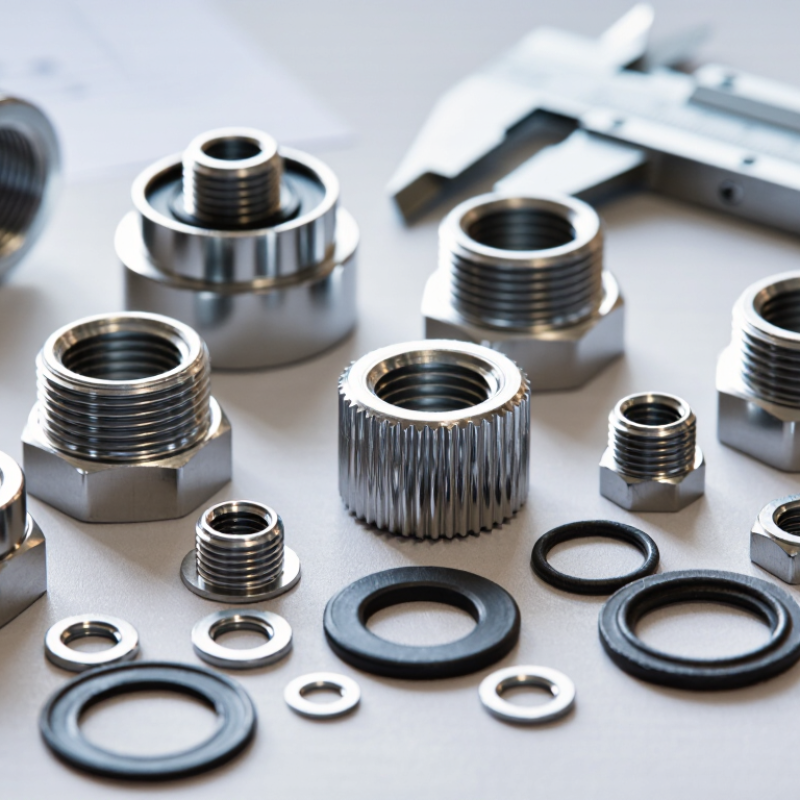
Buying Metal Packing Components requires more than comparing prices and attractive product photos. These parts may look simple, yet a small defect can cause leakage, corrosion, product contamination, or costly production delays. Buyers should examine material grade, dimensional accuracy, surface treatment, sealing performance, and compatibility with the packed product. A component that fits one container may fail on another line.

Dr. Susan Selke, a respected packaging researcher, offers a useful principle: “Good packaging protects the product, the user, and the environment.” That idea should guide every purchase decision. Ask for material certificates, inspection records, tolerance data, and practical samples. Test the component under realistic conditions, including pressure, temperature changes, vibration, and long storage periods. Do not rely on appearance alone. A polished surface can hide weak threads, uneven edges, or inconsistent coatings.

The ten tips in this guide focus on decisions that experienced buyers often make under pressure. They cover supplier evaluation, metal selection, sealing systems, corrosion resistance, customization, quality control, and total cost. Total cost matters more than unit price. A cheaper component may require extra labor or create frequent line stoppages. That risk is easy to underestimate. It happened to many teams, including careful ones. We should admit that specifications are not always perfect. Real products behave differently from laboratory samples. Review the evidence, challenge assumptions, and improve the purchasing checklist after every project. Reliable Metal Packing Components are selected through documented testing, clear communication, and steady attention to detail.
10 Tips for Buying Metal Packing Components

Define Service Conditions Across ASME Pressure Classes 150–2500

10 Tips for Buying Metal Packing Components

Define service conditions before selecting metal packing components for ASME pressure classes 150–2500. These classes are not direct pressure values. ASME B16.5 ratings change with material group and temperature. A Class 150 flange may tolerate far less pressure at elevated temperature. Always record operating pressure, design pressure, temperature, fluid, cycling, and flange type.

Tip: Build a service-condition sheet. Include startup, shutdown, vacuum, vibration, and upset conditions. Metal packing must match the actual sealing movement, not only the nominal class. ASME B16.20 provides dimensional and performance guidance for metallic gaskets used with ASME flanges. Small errors matter. Surface finish, bolt load, and flange alignment can decide leakage performance.

Tip: Check chemical compatibility and oxidation resistance. The NACE IMPACT study estimated global corrosion costs at US$2.5 trillion annually, equal to about 3.4% of global GDP. Corrosion can reduce sealing force before operators notice visible damage. Select alloys and coatings against the real fluid chemistry, including chlorides, hydrogen, steam, and contaminants.

Tip: Ask for material certificates, test records, and traceability. Do not accept “high pressure” as a specification. Class 2500 service often demands tighter installation control, yet a higher class does not automatically fix poor alignment. A neat calculation can still miss thermal cycling.
Match Metals Using 304, 316L, and Inconel 625 Corrosion Data

10 Tips for Buying Metal Packing Components

Corrosion matching should begin with the process fluid, not the purchase price. The NACE IMPACT study estimated global corrosion costs at about US$2.5 trillion annually, or 3.4% of global GDP. That figure supports a practical buying rule: request test conditions, alloy certificates, and crevice details before approving components.

Typical chemistry data place 304 stainless steel near a PREN value of 18–20. 316L usually reaches about 24–26 because molybdenum improves chloride resistance. Nickel-chromium alloy 625 often exceeds 45, offering a wider safety margin in hot, chloride-rich service. These estimates follow the PREN formula and typical ranges in ASTM A240 and ASTM B446. They are screening tools, not guarantees. Poor design can defeat a stronger alloy.

Look at actual corrosion rates from ASTM G31 immersion testing. Ask whether the report used the same temperature, concentration, exposure time, and surface finish. A polished coupon may perform better than a creviced packing gland. I would not accept a generic “corrosion resistant” statement. It is too vague. Check weld zones, fasteners, thread contact, and stagnant pockets. 316L may be sufficient for clean, moderate chloride exposure, while 625 can justify its cost in severe heat or mixed chemicals. Still, its selection needs site data. My first material choice can be wrong when oxygen levels or deposits change.

10 Tips for Buying Metal Packing Components - Match Metals Using 304, 316L, and Inconel 625 Corrosion Data

Tip Buying Check 304 Stainless Steel 316L Stainless Steel Nickel Alloy 625 Selection Guidance
Reference Corrosion Data and Material Matching
1 Identify the main corrosive exposure Suitable for many atmospheric, freshwater, food-processing, and mildly corrosive applications. More vulnerable to chloride pitting and crevice corrosion. Improved resistance in chloride-bearing environments because molybdenum helps reduce localized corrosion. Very high resistance to chloride-induced pitting, crevice corrosion, and many oxidizing or reducing chemical environments. Start with the actual fluid, concentration, temperature, aeration, and exposure time rather than selecting by alloy name alone.
2 Compare alloying elements by weight percentage Typical specification ranges: Cr 18–20%, Ni 8–10.5%, Mo not intentionally added, C ≤0.08%. Typical specification ranges: Cr 16–18%, Ni 10–14%, Mo 2–3%, C ≤0.03%. Typical specification ranges: Cr 20–23%, Ni balance, Mo 8–10%, Nb + Ta 3.15–4.15%, Fe ≤5%. Molybdenum and nickel content generally increase resistance to localized corrosion and reducing chemical environments.
3 Use PREN as a screening tool Indicative PREN: approximately 18–21. The lower value reflects the absence of intentional molybdenum. Indicative PREN: approximately 23–29, depending on chromium, molybdenum, and nitrogen content. Indicative PREN: approximately 45–55 when calculated with representative chromium, molybdenum, and nitrogen values. Higher PREN usually indicates better pitting resistance, but it is not a substitute for testing in the actual service environment.
4 Check chloride concentration and temperature Risk of pitting and crevice corrosion rises significantly as chloride concentration and temperature increase. Better than 304 for warm chloride-containing water, but it can still pit or suffer crevice corrosion under severe conditions. Preferred for severe chloride service, elevated temperatures, and stagnant or tightly creviced areas where stainless steels may be unsuitable. Do not approve a material from chloride concentration alone; temperature, oxygen level, deposits, and crevice geometry are also critical.
5 Review weld condition and heat treatment Weld heat can cause sensitization in standard 304 if carbon-rich grain-boundary precipitation occurs. The low-carbon “L” grade reduces sensitization risk after welding, although correct welding practice and cleaning are still required. Generally offers good weldability, but weld procedure qualification and post-weld surface cleaning remain important. Specify weld condition, filler compatibility, cleaning, and inspection requirements—not only the base-metal grade.
6 Specify surface finish and cleanliness A smooth, clean, passivated surface improves resistance, but embedded iron, scale, and scratches can initiate corrosion. Benefits from a smooth, chemically clean, passivated surface, especially in chloride or hygienic service. Strong inherent corrosion resistance, but oxide scale, machining residue, and contamination can still create local attack sites. Include roughness limits, passivation or pickling requirements, deburring, and a ban on carbon-steel contamination where appropriate.
7 Inspect crevices, threads, and packing geometry Narrow gaps, threaded areas, washers, and deposits can concentrate chlorides and accelerate localized corrosion. More resistant than 304, but stagnant crevices can still initiate attack in hot or concentrated chloride solutions. Better suited to severe crevices, but geometry that traps corrosive fluid should still be minimized. Prefer smooth transitions, drainable designs, compatible washers, and minimized dead legs in packing components.
8 Evaluate galvanic compatibility Can become the anodic member when coupled to more noble alloys in a conductive electrolyte, particularly with a small exposed area. More noble and corrosion-resistant than 304 in many environments; electrical isolation may still be required. Highly noble and corrosion-resistant; coupling it directly to stainless steel can increase attack on the less noble metal. Match metals where possible, electrically isolate dissimilar alloys when needed, and control moisture at joints.
9 Verify mechanical and dimensional requirements Commonly selected for general-purpose components because of availability, formability, and balanced strength. Provides improved corrosion resistance while retaining useful fabrication and forming characteristics. Offers excellent corrosion resistance and high strength, but may have higher forming, machining, and procurement demands. Confirm hardness, tensile strength, yield strength, thickness, thread dimensions, tolerances, and installation loads separately from corrosion data.
10 Request traceability and test documentation Require heat or lot identification and a material certificate confirming the specified stainless-steel grade. Confirm the “L” carbon limit and molybdenum range on the certificate when welding or chloride resistance is important. Confirm the nickel-alloy grade, chemistry, heat treatment, product form, and applicable mechanical test results. Require certificates, inspection records, surface-condition details, and—when service is critical—corrosion or compatibility testing.
Note: Chemical composition ranges are representative specification limits. PREN is an indicative screening value commonly calculated as Cr + 3.3Mo + 16N, with all alloying elements expressed in weight percent. Actual corrosion performance depends on environment, temperature, surface condition, fabrication, stress, geometry, and exposure time.

Verify Dimensions and Standards Under ASME B16.20 and API 6A

Buying metal packing components requires more than matching a nominal size. ASME B16.20 specifies dimensional requirements for metallic gaskets, including oval, octagonal, RX, and BX ring types. Check the exact edition, nominal pipe size, pressure class, material, and groove profile. A small mismatch can leave uneven contact around the flange. It may look acceptable on a workbench. Under pressure, it can leak.

API Specification 6A uses pressure ratings such as 2,000, 3,000, 5,000, 10,000, and 15,000 psi for relevant wellhead and tree equipment. Confirm that the packing component matches the equipment’s pressure rating, temperature range, material class, and product specification level.

Do not assume an ASME-compatible gasket fits an API 6A ring groove. The standards use different design controls. Compare certified drawings, not supplier descriptions.

Verify hardness, coating, and traceability against the material certificate. Industry quality reports repeatedly identify documentation gaps as a recurring source of component nonconformance.

That detail is easy to overlook. It should not be.

A practical inspection should measure outside diameter, inside diameter, thickness, and ring number with calibrated tools. Record the readings before installation. One imperfect measurement can distort the whole decision. Recheck it.

Compare Leakage, Compression, Recovery, and 10⁶-Cycle Durability

10 Tips for Buying Metal Packing Components

Leakage is the first figure to challenge. ISO 15848-1 classifies fugitive-emission performance through measured leakage rates, temperature, and mechanical cycles. Ask for the actual test medium, pressure, temperature, and cycle count. A low leakage result means little if testing used clean laboratory conditions.

Compression and recovery show how a packing component behaves after installation. ASTM F36 measures compressibility and recovery, while ASTM F37 evaluates sealing performance under controlled conditions. Compare both values, not compression alone. Excessive compression may reduce leakage initially, but it can accelerate extrusion or permanent deformation. Recovery matters after thermal movement, vibration, and bolt relaxation. Small details matter here.

Durability claims need careful reading. One million cycles sounds convincing, yet ISO 15848-1 and related qualification practices do not replace application-specific testing. Request a 10⁶-cycle report with load, stroke, temperature, media, and leakage readings at defined intervals. Look for stable results, not only a passing final value. A component that survives one million cycles may still fail during installation. I have seen specifications overlook surface finish and bolt-load variation. That is a weakness worth admitting. Select metal grade, cross-section, and coating only after reviewing the equipment’s pressure, temperature, corrosion exposure, and maintenance access. Independent laboratory records are more useful than impressive marketing language.

Audit MTRs, ISO 9001 Certification, Traceability, MOQ, and Lead Time

Buying metal packing components requires more than comparing unit prices. Audit the Material Test Report (MTR) before approving samples. Check the alloy grade, heat number, chemical composition, mechanical results, and test standard. The MTR should match the purchase order and the markings on the component. A clean document is not enough. Ask who issued it and whether the data is traceable to the original heat.

Review the supplier’s ISO 9001 certification, including its scope and expiry date. Certification supports controlled processes, but it does not guarantee every shipment is perfect. Request inspection records, calibration evidence, and corrective-action history when quality concerns appear. Traceability should follow each part from raw material to packing list. Heat numbers, batch codes, and inspection dates make investigations faster. Small labels matter.

MOQ and lead time also deserve careful checking. Ask whether the minimum order applies to each size, material, or total shipment. Confirm production time, inspection time, packaging time, and transport separately. A quoted “15-day lead time” may exclude testing. That detail can disrupt a project. Build a written schedule with realistic buffers, especially for custom dimensions. I have seen buyers focus on price and overlook document delays. That mistake is easy to repeat. Ask direct questions, record the answers, and verify them against the first production lot.

10 Tips for Buying Metal Packing Components

This illustrative 100-point purchasing scorecard prioritizes material documentation, traceability, dimensional control, certification, and delivery performance. Request an EN 10204 3.1 material test report (MTR) when applicable, verify ISO 9001 certification scope, confirm lot traceability, and agree on MOQ and lead-time requirements before placing an order. The weights are a practical evaluation model, not company-specific market data.