Leave Your Message

China Top 10 Paint Can Components Manufacturers?

China’s Top 10 Paint Can Components Manufacturers? This question deserves more than a simple supplier ranking. A paint can may look ordinary, yet its lid, pail, handle, gasket, coating, and pouring edge must work together under demanding conditions. One loose cover can create leakage. One weak handle can damage warehouse safety. A poor internal coating may affect paint quality over time.

Robert Budway, president of the Can Manufacturers Institute, has emphasized, “The can is an essential part of the product experience.” That observation applies directly to Paint Can Components. Buyers should examine material consistency, dimensional accuracy, sealing performance, corrosion resistance, and production traceability. Factory audits also matter. Product photos are not enough.

This guide explores ten Chinese manufacturers connected with Paint Can Components and compares their practical strengths. It considers metal forming capacity, printing quality, closure design, customization, export experience, and quality-control procedures. Some suppliers may excel at large-volume pails. Others may perform better with small cans, specialty lids, or custom handles.

The ranking is not absolute. Needs differ by paint type, filling line, market, and transport conditions. That is worth remembering. A low unit price can become expensive after dented shipments or inconsistent closures. I have also left room for uncertainty, because public supplier information is sometimes incomplete or outdated. Readers should request samples, inspection records, and current certifications before making a final decision. The best manufacturer is not always the largest. It is the one that matches dependable components with your actual production requirements.
China Top 10 Paint Can Components Manufacturers?

What Are Paint Can Components and Why Do They Matter?

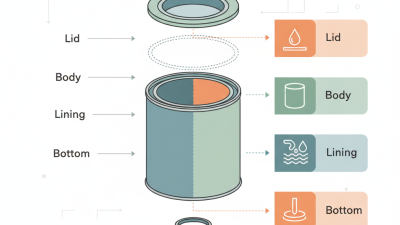
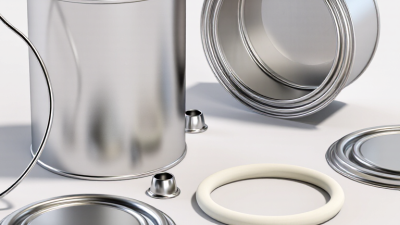
Paint can components are the small parts that make a container safe, usable, and dependable. They usually include the body, lid, opening ring, handle, wire, gasket, and interior coating. Each part affects storage, transport, filling, and opening. A strong can should resist dents, prevent leakage, and protect paint from contamination.

The lid creates the primary seal, while the gasket helps maintain that seal during temperature changes. The opening ring must remove smoothly without leaving sharp edges. Handles need balanced strength, especially on larger cans filled with heavy liquid. Interior coatings also matter because unsuitable materials may react with paint ingredients. This detail is easy to overlook.

When evaluating manufacturers in China, buyers should examine material certificates, dimensional tolerances, coating tests, and production traceability. Sample testing is essential. A component may look acceptable but fail after repeated opening or long storage. Quality teams often inspect seam strength, closure fit, corrosion resistance, and print adhesion. These checks support more reliable purchasing decisions.

There is no perfect component design. A thicker lid may improve strength but increase material use and shipping weight. A tighter seal may protect the paint but make opening harder. Suppliers and buyers must balance safety, performance, cost, and user experience. Clear specifications reduce misunderstandings, although they cannot replace real testing.
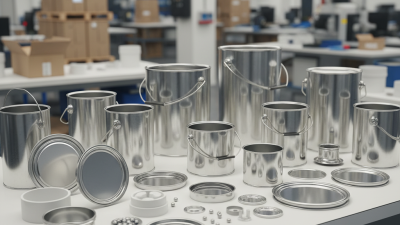
China Top 10 Paint Can Components Manufacturers? – What Are Paint Can Components and Why Do They Matter?

Typical dimensions of common paint can components in a steel can, shown as representative engineering ranges.

Paint can components work together to provide containment, sealing, opening, handling, and product protection. Body, lid, and bottom thickness affect strength and dent resistance; the closure ring and gasket help prevent leakage and contamination; the handle supports safe transportation. Actual dimensions vary according to can capacity, coating type, and packaging design.

How to Evaluate China’s Top Paint Can Component Manufacturers

Evaluating China’s top paint can component manufacturers requires more than comparing online catalogs. Examine lids, rings, handles, spouts, and sealing parts as a complete system. Request material specifications, dimensional drawings, and recent inspection records. Steel thickness, coating adhesion, gasket elasticity, and closure force should match the can design. Small deviations can cause leakage, denting, or difficult opening.

A capable manufacturer should explain its production controls clearly. Check incoming material inspection, forming accuracy, coating consistency, and lot traceability. Ask for sample testing under stacking, vibration, temperature change, and repeated opening conditions. Independent laboratory reports add confidence, but raw data matters more than attractive certificates. Factory audits should review calibration records, maintenance logs, defect rates, and corrective actions. A clean production floor helps, but it proves little alone.

Communication is another practical test. Reliable teams answer technical questions with measurements, not vague promises. They should confirm tooling ownership, minimum order quantities, lead times, packaging methods, and replacement policies. Sample approval must include signed specifications and visible acceptance limits. No audit is perfect. A polished sample may hide unstable mass production. For that reason, evaluate several production lots before making a long-term decision. Keep retention samples for future comparison. The best supplier is not always the cheapest; it is the one that delivers consistent components, documents problems honestly, and improves when evidence exposes a weakness.

Top 10 Paint Can Component Manufacturers in China

Top 10 Paint Can Component Manufacturers in China

China’s paint can component industry includes specialized manufacturers for ten essential products. These include tinplate can bodies, detachable lids, ring closures, handles, wire bails, plastic plugs, pouring spouts, sealing gaskets, interior liners, and printed metal panels. Each supplier may focus on one component or provide several compatible parts. Experienced manufacturers usually control stamping, forming, coating, and inspection under one production system.

Reliable suppliers should provide material certificates, dimensional drawings, coating specifications, and batch inspection records. Check steel thickness, lid fit, seam strength, gasket elasticity, and surface cleanliness before placing a large order. For paint packaging, a small mismatch can cause leakage, corrosion, or difficult opening. Factory audits also reveal practical details, such as clean storage areas and stable tooling maintenance. These details matter more than attractive catalog images.

A useful Top 10 evaluation should consider production capacity, mold accuracy, customization ability, export experience, and response speed. It should also review testing for pressure resistance, coating adhesion, and chemical compatibility. No ranking is perfect. A supplier with excellent lids may not produce dependable handles. Samples can still mislead when mass production uses different materials. Ask for recent batch data and test several sizes under real filling conditions. That extra step often exposes problems early.

What Components and Services Do These Manufacturers Provide?

China’s leading paint can component manufacturers supply more than empty containers. They produce steel pails, lids, friction rings, handles, spouts, gaskets, and protective liners. Many also provide tooling, automated forming, offset printing, and leak testing. A 2024 Grand View Research report estimates the global metal cans market will expand at about 3.9% annually through 2030. That growth increases demand for stable dimensions and faster customization.

Component quality affects filling efficiency and shelf protection. Manufacturers commonly offer tinplate thickness options, internal coatings, tamper-evident closures, and corrosion-resistance testing. Some factories use automated welding and camera inspection to detect dents, pinholes, and faulty seams. They may also provide color matching, sample approval, pallet design, and export documentation. According to a 2023 report by the World Packaging Organisation, packaging performance increasingly depends on material efficiency, recyclability, and supply-chain traceability.

Service depth varies widely. A capable supplier can review a customer’s paint viscosity, closure force, stacking load, and storage conditions before production. This practical review often prevents costly redesigns. However, not every factory verifies coating compatibility under long-term exposure. That gap deserves attention. Buyers should request batch records, test methods, tolerance data, and independent inspection options. A recent Smithers analysis also identifies lightweighting and improved metal recovery as major packaging development priorities. Lower weight sounds attractive, but thinner steel can reduce impact resistance when specifications are poorly controlled.

How to Choose the Right Chinese Paint Can Component Supplier

China Top 10 Paint Can Components Manufacturers?

How to Choose the Right Chinese Paint Can Component Supplier

Choosing a Chinese paint can component supplier requires more than comparing unit prices. Examine lids, rings, handles, plugs, and sealing parts as one working system. Request production samples before approving a large order. Check tinplate thickness, edge curling, coating uniformity, and dimensional tolerance with basic measuring tools. Small differences can cause leakage or difficult assembly.

Ask each manufacturer for inspection records, material certificates, and clear process controls. A reliable factory should explain how it manages stamping, cleaning, coating, and packing. Visit the production site when possible. Look for organized storage, calibrated gauges, and traceable batch labels. Ask whether the supplier can maintain consistent output during peak seasons. Capacity claims often sound impressive. Evidence matters more.

Test components with your actual paint can body and filling process. Check lid fit after temperature changes, transport vibration, and repeated opening. Confirm compatibility between gaskets, coatings, and the intended paint formulation. Requirements may differ across markets, so review applicable packaging and chemical-contact regulations with a qualified specialist. A low quotation can hide tooling charges, high minimum orders, or weak after-sales support. I would not treat the cheapest offer as the safest choice. No checklist is perfect. Keep approval samples, inspection photos, and written specifications for every shipment.

China Top 10 Paint Can Components Manufacturers? - How to Choose the Right Chinese Paint Can Component Supplier
Rank Anonymous Supplier Profile Core Components Typical Materials Production Processes Applicable Can Types Quality & Compliance Evidence to Request Typical MOQ Typical Lead Time Selection Score
1 Supplier Profile 01
Integrated metal-component producer
Lids, rings, handles, plugs and pour spouts Tinplate, electrolytic tinplate, coated steel and galvanized wire Stamping, curling, beading, wire forming and automated assembly General line, medium-duty and heavy-duty paint cans ISO 9001 certificate, coating test reports, dimensional inspection records and production samples 10,000–30,000 pieces per component 25–40 days 92/100
2 Supplier Profile 02
High-volume closure specialist
Press-on lids, friction-fit covers, plug seals and gasketed closures Tinplate, ECCS steel, polyethylene and synthetic rubber Progressive die stamping, sealing, gasket insertion and leak testing Round and rectangular cans for water-based and solvent-based coatings Leak-test records, material declarations, food-contact documentation where applicable and traceable batch coding 20,000–50,000 pieces per component 30–45 days 90/100
3 Supplier Profile 03
Custom metal-forming manufacturer
Custom lids, corner protectors, handles and reinforcing rings Tinplate, low-carbon steel, stainless steel and coated wire Deep drawing, stamping, laser tooling preparation and resistance welding Industrial paint, protective coating and construction-chemical containers Tooling drawings, first-article inspection report, weld-strength records and surface-finish samples 5,000–20,000 pieces per component 35–55 days 88/100
4 Supplier Profile 04
Decorative and surface-finishing supplier
Printed lids, rings, handles, decorative bands and identification plates Tinplate, ECCS steel, aluminum and polyester-coated steel Stamping, offset printing, coating, curing and assembly Retail paint cans and visually branded metal packaging Color consistency records, coating adhesion tests, rub-resistance results and print approval samples 10,000–25,000 pieces per component 30–50 days 87/100
5 Supplier Profile 05
Wire-handle and accessory specialist
Wire handles, plastic grips, handle ears, clips and brackets Low-carbon steel wire, galvanized wire, polypropylene and polyethylene Wire bending, spot welding, electroplating, injection molding and riveting Small and medium round cans, pails and utility containers Load testing, salt-spray results, plating-thickness records and grip-fit inspection 20,000–100,000 pieces per component 20–35 days 85/100
6 Supplier Profile 06
Plastic sealing-component producer
Plastic lids, pour spouts, plugs, gaskets and tamper-evident rings Polypropylene, polyethylene, thermoplastic elastomer and synthetic rubber Injection molding, compression molding, gasket assembly and dimensional sorting Water-based coatings, adhesives, sealants and specialty chemicals Material safety data, migration or chemical-compatibility data, mold-trial report and leak-test results 30,000–100,000 pieces per component 25–45 days 84/100
7 Supplier Profile 07
Small-batch and prototyping supplier
Prototype lids, custom rings, sample handles and low-volume accessories Tinplate, aluminum, stainless steel, ABS and polypropylene Short-run stamping, CNC machining, 3D-printed tooling aids and manual assembly New product development, private-label trials and pilot orders Prototype dimensional report, material certificates, engineering-change control and sample approval process 500–5,000 pieces per component 15–30 days 82/100
8 Supplier Profile 08
Heavy-duty industrial component producer
Reinforced lids, lever-lock rings, heavy-gauge handles and safety closures Heavy-gauge steel, tinplate, stainless steel and galvanized components Heavy stamping, roll forming, welding, riveting and load testing Large pails, industrial coatings and high-viscosity material containers Load-capacity test, stacking test, weld inspection, corrosion testing and packaging validation 5,000–20,000 pieces per component 35–60 days 81/100
9 Supplier Profile 09
Export-oriented packaging-component supplier
Standard lids, handles, rings, plugs and replacement components Tinplate, coated steel, galvanized wire and polypropylene Automated stamping, wire forming, assembly and export packaging Common paint-can sizes for distributors and contract packers Export packing specifications, pre-shipment inspection, carton-strength test and container-loading plan 20,000–60,000 pieces per component 30–45 days 80/100
10 Supplier Profile 10
Cost-focused standard-component supplier
Standard press-on lids, basic handles, rings and plastic plugs Standard tinplate, low-carbon steel wire and polypropylene Stamping, curling, wire bending, basic plating and manual packing High-volume standard paint cans and non-specialty applications Incoming-material records, basic dimensional report, sample approval and final visual inspection 30,000–100,000 pieces per component 25–40 days 78/100
How to use this comparison: The profiles are intentionally anonymized and organized as a supplier-selection framework. Confirm every capability, material grade, certification, MOQ, lead time, tooling cost, export document and test result through current quotations, factory audits and pre-shipment inspections before placing an order.