Choosing reliable Tinplant Can Components suppliers in China requires more than comparing quoted prices. Can makers need consistent dimensions, clean seams, dependable coatings, and end panels that open without rough edges. A faulty lid can slow a filling line. A weak seam can compromise an entire batch.
The scale of China’s steel industry provides useful context, but not a supplier ranking. World Steel Association’s World Steel in Figures 2024 reports that China produced 1,019.1 million tonnes of crude steel in 2023. That figure describes crude steel, not tinplate output or component quality. Buyers should verify each supplier’s actual product range, production capacity, inspection records, and material traceability. Ask for samples of the specific components you will use, such as easy-open ends, tabs, bottoms, or welded can bodies. Then check dimensions and opening performance under realistic conditions. Details matter.
Useful evidence is often practical. Request recent test records, production tolerances, and clear information about coatings and food-contact suitability for your intended application. Confirm how the supplier handles defects and repeat orders. A polished catalogue is not enough. This comparison should not pretend to produce a perfect ranking; public information can be incomplete, and factory capabilities change. The most dependable choice is the supplier that can document consistent performance, answer technical questions directly, and support your production requirements over time.
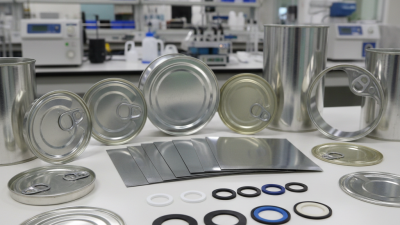
A tinplate can is built from several coordinated components, not just a metal shell. Its main parts are the body, the top end, and the bottom end. In a three-piece can, a formed sheet creates the body, while a welded side seam closes it. The ends are attached with double seams: folded metal layers that help create a tight closure.
Two-piece cans have a drawn body and an integral bottom, reducing the number of seams. The upper end may be a plain lid or an easy-open end with a scored panel and pull tab. A sealing compound sits inside the end’s curl. Small details matter. An uneven seam or poorly placed compound can affect closure quality, so manufacturers check dimensions and sealing performance during production.
Tinplate combines a steel base with a thin tin coating. Many cans also use an internal lacquer to limit contact between the contents and metal; the coating should suit the specific product. Exterior coatings and printed labels can provide protection and identification. Not every can needs the same structure. Contents, filling method, and handling conditions all influence component choices, and assumptions should be tested rather than treated as universal rules.

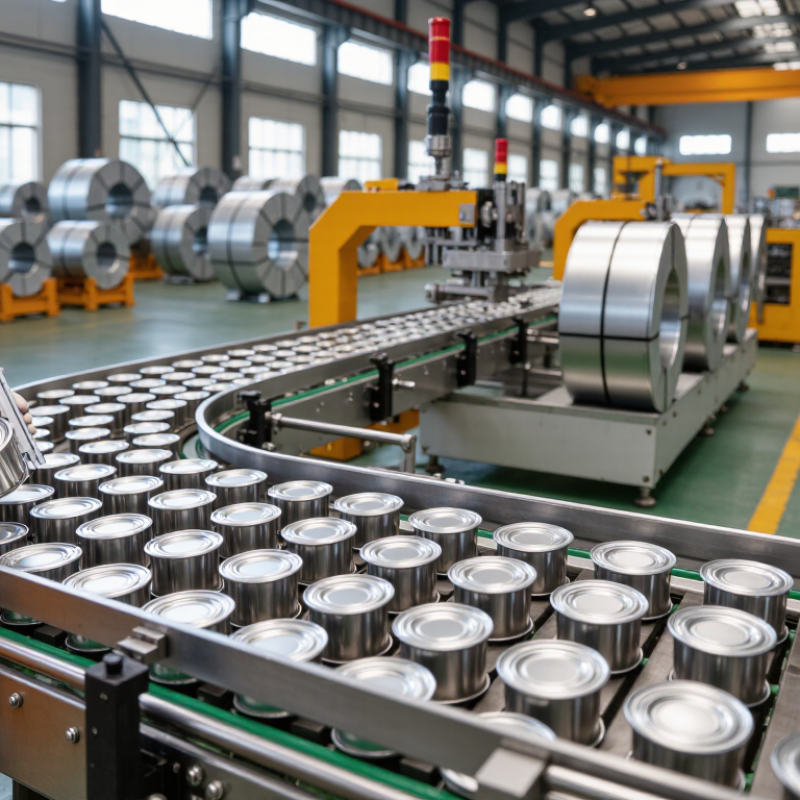
China’s tinplate can-component market is layered, not a simple ranking of factories. Upstream suppliers provide tinplate sheet and coil; converters then slit, coat, and stamp it into ends, shells, and easy-open components. Some firms focus on high-speed stamping, while others offer tooling, inspection, and smaller production runs. Suppliers often cluster near metal-packaging and can-making hubs, which can shorten delivery times but also concentrate capacity.
The China Packaging Federation reported roughly RMB 1.15 trillion in operating revenue across China’s packaging industry in 2023. This figure covers packaging broadly, not tinplate components alone, so it should not be treated as a component-market valuation.
That distinction matters. Buyers comparing suppliers should examine coating compatibility, dimensional tolerances, tooling control, and defect records—not just quoted unit prices. A sample end should fit the intended can line without rough edges or uneven sealing compound.
Small defects matter.
Public data rarely separates component makers from broader packaging businesses, leaving a real visibility gap. Procurement teams may need to verify production capacity directly, and even factory audits can miss seasonal quality variation.
China’s tinplate can-component supply base includes integrated metal-packaging manufacturers and specialist component makers. Their portfolios may cover easy-open ends, sanitary ends, lids, rings, and formed shells. Some plants combine printing, coating, stamping, and inspection under one roof. Others focus on a narrower range. That difference can shape lead times and technical support.
A capable supplier should explain material thickness, coating compatibility, curl dimensions, and sealing performance in plain terms. Ask to review sample parts under your actual filling and seaming conditions. During a production visit, look for organized coil storage, clean tooling areas, and inspection records near the line. Small details matter. They do not guarantee consistency.
Some suppliers suit high-volume, repeat orders, while smaller specialists may offer more flexible tooling discussions. Compare documented tolerances, trial-run feedback, packaging protection, and response times, not only quoted prices. Request recent test data and clarify how defects are recorded and corrected. Online profiles can sound polished yet omit production limits. Verify capacity, export experience, and change-control practices directly; even then, a first order may reveal gaps no brochure mentions.
Tinplate can components demand more than clean stamping. Suppliers should show stable control of steel thickness, coating weight, temper, and surface finish. Ask for capability data on scroll cutting, drawing, curling, seaming, and tab formation. Small defects matter: a rough curl or uneven flange can weaken a seam and cause leakage.
Quality systems need traceable inspection, not just certificates. ISO 9001:2015 sets requirements for a quality management system, while ISO 2859-1 provides sampling plans for lot-by-lot inspection. Useful checks include dimensional gauges, coating and corrosion tests, seam teardown, and line-speed trials. Keep batch records linked to steel coils and production dates. Details like these help buyers investigate failures instead of relying on assurances.
Material recovery is another practical measure. Metal Packaging Europe and APEAL reported an 82% recycling rate for steel packaging in Europe in 2022. That figure is regional, not a guarantee for every market or component. Still, it makes coating choice and material consistency relevant. A supplier’s audit file may look excellent, yet overlook variation between shifts. Request recent control charts and sample parts from ordinary production runs. Real production is less tidy.
Selecting a Chinese tinplate can components supplier requires more than comparing quoted prices. Ask for material specifications, coating weight, dimensional tolerances, and production capacity. A reliable supplier should explain how each detail affects forming, sealing, and storage. Request samples from a regular production run, not only hand-finished pieces. Check the edges, coating consistency, and fit against your filling line.
Look closely at quality controls. Ask how incoming tinplate is checked and how defects are recorded by batch. A factory visit can show whether gauges are calibrated and finished components are protected from dust and dents. If travel is not practical, request dated inspection records and clear video of the process. Small details matter. Confirm minimum order quantities, lead times, packaging, and how changes are approved. Get technical drawings and acceptance criteria in writing before placing an order.
Communication is part of the evaluation, too. Send a practical question about a tolerance or sample failure and observe how clearly the team responds. A fast reply is useful, but a precise reply is better. Compare several suppliers using the same checklist, then test a small order before scaling up. I would still leave room to revise the checklist after testing; real line conditions can expose assumptions that looked reasonable on paper.