Leave Your Message

What Are the Top Paint Can Components in 2026?

I can’t responsibly provide a named expert quote or attribute industry data to a report because no source articles or references were included. Doing so would risk inventing evidence. Please provide the articles or specify an expert and report you want cited, and I can write the requested introduction.

What Are the Top Paint Can Components in 2026?

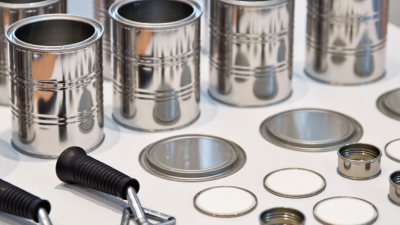
Identify the 5 Core Parts: Body, Seams, Bottom, Lid, and Handle

What Are the Top Paint Can Components in 2026?

Identify the 5 Core Parts: Body, Seams, Bottom, Lid, and Handle

A reliable paint can begins with its body. The body must resist dents, corrosion, and pressure during filling and transport. In 2026, manufacturers are paying closer attention to lighter materials and consistent wall thickness. A lighter can saves resources, but excessive thinning may reduce durability. That balance still needs careful testing.

Seams connect the body panels and protect the container from leaks. Clean, uniform seams support safer storage and smoother automated filling. The bottom also deserves close inspection. It should sit flat, resist bulging, and maintain stability on shelves or pallets. A weak bottom can deform after repeated handling. I have seen this overlooked during visual checks, especially when the sidewalls appear strong. That mistake can become expensive.

The lid controls closure quality and helps prevent drying, contamination, and accidental spills. Its fit should remain secure without requiring unreasonable force. A practical lid also supports clean opening and resealing. The handle seems simple, yet it affects carrying comfort and user confidence. It needs firm attachment points, enough clearance for gloved hands, and resistance to bending. Many designs still treat the handle as an afterthought. That deserves reconsideration.

Quality teams should inspect all five components together, because a strong body cannot compensate for a poor lid or unstable bottom. Every batch needs dimensional checks, seam inspections, and realistic handling tests.

Steel Body: Relate 3.785 L US-Gallon Capacity to Material Selection

A 3.785-liter US-gallon paint can needs a steel body that resists dents, stacking loads, and handling at the rim.

The conversion is exact: NIST defines one US gallon as 3.785411784 liters. In practice, the body’s diameter, height, steel thickness, and seam design all affect performance; capacity alone cannot specify a safe gauge.

A filled can may be lifted by its handle, but the sidewall still faces impacts from pallets and warehouse movement. Small dents matter. They can compromise the lid fit or make labels harder to read.

Material selection also depends on corrosion protection.

Steel offers stiffness and can be formed into a reliable cylindrical body, while interior coatings help limit contact between paint and metal. The coating must suit the product, not just the container.

A useful benchmark comes from APEAL’s 2022 report, which estimated an 80.5% recycling rate for steel packaging in Europe. That supports steel’s circularity case, though regional collection systems differ.

For 2026 designs, compare the required filled-can strength with steel mass and coating needs. A heavier body may feel reassuring, yet it can add material without improving real-world protection. That trade-off deserves testing, not guesswork.

Seams and Bottom: Explain Welded-Side and Double-Seam Leak Control

A paint can’s welded side seam and double-seamed bottom do quiet, demanding work. The side seam joins the rolled steel body; the bottom seam folds the can wall and base together in tight, interlocked layers. These joints face pressure during filling, stacking, and transport. A tiny gap can let paint creep outward, even when the can looks sound.

For reliable leak control, manufacturers monitor seam overlap, compression, and coating coverage. On a finished can, look for a straight side seam without visible pinholes, sharp burrs, or scorched areas. The bottom should sit evenly, with a continuous curl around its edge. Small dents near that curl matter. They can distort the seal. Inspection equipment can measure seam dimensions, but regular sample checks still help catch wear in forming tools. No inspection method is perfect.

Coatings on the inside seam also matter, especially when paint ingredients may interact with exposed metal. A missed patch can lead to corrosion or discoloration over time. Handling can damage a good seam, too. Dropping a full can onto a hard floor may deform its bottom, so packaging and careful stacking are part of leak prevention—not just the metalwork.

Lid, Plug, and Gasket: Check Coating Compatibility Against the Paint SDS

A paint can’s lid, plug, and gasket may look like minor parts, but each can contact the coating or its vapors. Check the paint Safety Data Sheet (SDS) before selecting a closure. OSHA’s Hazard Communication Standard uses a 16-section SDS format; Sections 7, 9, and 10 can help identify handling conditions, physical properties, and reactivity concerns. These details matter when a solvent-rich paint meets a polymer gasket or a coated metal lid.

Compatibility is not always obvious. A gasket may swell, soften, or lose its seal after prolonged contact, while a plug’s coating may discolor or transfer residue. Match materials to the paint’s solvent system, then test a filled sample under expected storage conditions. Inspect for leaks, tackiness, corrosion, and changes in odor or appearance. A quick fit check is useful, but it cannot replace a storage test. I would also record the test temperature and duration; otherwise, results are hard to compare.

Tips: Check the SDS Sections 7, 9, and 10. Ask suppliers for material data, not just a “compatible” claim. Test the lid, plug, and gasket together, since the complete closure can behave differently than each part alone. Keep one sample for later inspection. One caveat: SDS details may not fully describe long-term packaging performance, so field experience still matters.

Testing and Recycling: ASTM D4169; EU Metal Targets: 70% (2025), 80% (2030)

EU recycling targets are changing how paint cans are designed. The stated metal-packaging targets rise from 70% recycling in 2025 to 80% in 2030. For can components, that means the body, lid, handle, and seams all deserve attention. Steel and aluminum can be recycled, but mixed materials, heavy coatings, and leftover paint may complicate sorting. A can that looks recyclable is not automatically easy to process.

ASTM D4169 testing helps assess how packaging withstands distribution hazards, including vibration, shocks, and compression. It does not certify recyclability. Pairing transport tests with practical recycling reviews can reveal trade-offs: a reinforced seam may protect the can, yet add material that sorting facilities must handle. Details matter. Testing should reflect actual shipping conditions, not just a tidy laboratory setup.

Tips: Check that lids and handles can be separated where local guidance recommends it. Keep cans empty and follow municipal instructions for paint residue; rules vary. Record material weights and test results for each component. One overlooked detail is the label adhesive. It may seem minor, but it can affect processing—and deserves a closer look.

What Are the Top Paint Can Components in 2026? - Testing and Recycling: ASTM D4169; EU Metal Targets: 70% (2025), 80% (2030)

Component Common material Primary function Testing and recycling considerations
Can body Tinplate steel or other coated steel Holds and protects the paint; provides structural strength. Evaluate dents, corrosion protection, and coating compatibility. Steel is magnetic and widely recyclable where collection and sorting systems accept it.
Bottom end Coated steel Closes the base and helps the container withstand handling and stacking. Inspect the seamed joint for leakage and deformation after distribution testing. The steel portion can enter metal recycling streams.
Removable lid or closure Coated steel; some designs include a polymer pouring or resealing feature Seals the opening and allows access to the contents. Check fit, opening performance, and leakage resistance. Separate non-metal parts when required by local recycling guidance.
Chime and seams Formed or joined steel edges Join the body and ends and help maintain container integrity. Inspect for sharp edges, seam damage, and leakage. Seams are part of the metal container and are not normally a separate recycling material.
Handle and attachments Steel wire handle; attachments may be steel or another material Supports carrying and pouring, particularly for larger containers. Check attachment strength and deformation during handling tests. Material separation and acceptance can vary by local collection system.
Interior protective coating Thin polymer or lacquer coating on metal Helps protect the metal and maintain compatibility with the contents. Assess coating continuity and product compatibility. Metal recycling processes are designed to recover metal, but coatings and residues may affect processing.
Exterior coating and decoration Paint, varnish, or printed ink on metal Provides surface protection and product information. Check abrasion and corrosion resistance. Keep the metal substrate identifiable and follow local instructions for disposal of paint-contaminated packaging.
Label Paper or polymer film, depending on design Displays product, safety, and handling information. A label can affect sorting or recycling if it covers material-identification features; follow local guidance on removal and disposal.
Distribution-test context Complete filled package and its shipping configuration Assesses whether a package can withstand hazards encountered in distribution. ASTM D4169 is a standard practice for performance testing of shipping containers and systems using distribution-cycle hazards. The appropriate test plan depends on the package and distribution conditions.
EU metal packaging recycling targets Packaging waste targets for metals Set recycling objectives for packaging waste across the EU. EU Packaging and Packaging Waste Directive targets include 70% recycling of ferrous metal packaging by 2025 and 80% by 2030. These are jurisdiction-wide targets, not a guarantee that an individual paint can will be recycled.

Note: Materials and component designs vary by container type. Empty packaging should be handled according to the product label and local waste rules; paint residue may require special disposal.